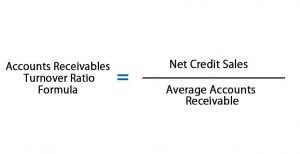

Autonomous solutions are built using advanced algorithms and machine learning designed to collect and process financial data, generate financial statements, and perform routine accounting activities, such as bookkeeping. Technology can execute tasks independently like routine data entry, invoice processing, payments, and invoice reconciliation. Accounting automation has changed the finance world dramatically over the past 10 years. As we’ve seen throughout this article, these technologies transform tasks that once took days of manual work into smooth processes completed in minutes. They include better accuracy, improved compliance, and real-time financial visibility, allowing finance Statement of Comprehensive Income teams to shift from data entry to strategic advising.
- The technology has enabled businesses to replace manual labor with machine intelligence, enhancing the financial management of organizations.
- The proper recognition and amortization of R&D costs ensure accurate financial reporting and compliance with accounting standards, reflecting the true financial impact of innovation in the electric vehicle industry.
- Autonomous Networks, as defined by TM Forum, address this fundamental mismatch by providing a standards-based approach to embedding intelligence, automation, and closed-loop control into network operations.
- As we’ve explored the top AI-powered invoice processing systems and best practices for implementation, it’s clear that accounts payable automation is no longer a luxury, but a necessity for forward-thinking businesses.
- Human accountants will continue to play a vital role in overseeing autonomous systems, interpreting results, making strategic decisions, and providing professional judgment.
- Algorithms recognize patterns like sales growth or expense spikes that help forecast income or risks.
- The value that autonomous finance provides in the accounting and finance industry certainly cannot be underestimated.
It’s the 11th hour of your financial close (again)—and the pressure is on

Sophisticated functionality provides limited value if users struggle to navigate the software. Successful automation platforms autonomous accounting offer advanced capabilities through intuitive interfaces that don’t require days of training. Cloud-based delivery models provide additional advantages through automatic updates, reduced IT infrastructure requirements, and anytime, anywhere access via standard web browsers or mobile applications.
- EY refers to the global organization, and may refer to one or more, of the member firms of Ernst & Young Global Limited, each of which is a separate legal entity.
- Ensure your transactional data is accurate and secure and will lead to strategic insights that can be delivered to key stakeholders to drive business strategies, enable continued business growth, and reduce risk.
- PurposeWith your consent, we use this service provided by uMarketingSuite to run A/B tests across the HSO.com application.
- These technologies enable decision-making while automating tasks like account reconciliations, journal entry management, and budgeting.
Pagtutugma ng mga panuntunan, machine learning at exception handling

The introduction of desktop software marked the first major shift, replacing handwritten entries unearned revenue with digital records. Cloud-based platforms followed, giving accountants real-time access to data and enabling secure collaboration from anywhere. The potential of AI agents is significant, but so are the risks if they aren’t properly managed. Poorly built or inadequately supervised AI agents could cause severe disruption, from misclassifying transactions to fabricating data — not only wreaking havoc on financial statements but fundamentally destroying trust. They understand that a Stripe charge might relate to a Shopify order, that a supplier payment needs matching to multiple invoices, that seasonal variations affect cash flow projections.
The Top 7 Trends That Lead to a Fully Autonomous Future of AP
- AI and ML technologies are becoming increasingly sophisticated and capable of handling complex accounting tasks.
- Backed by 2,700+ successful finance transformations and a robust partner ecosystem, HighRadius delivers rapid ROI and seamless ERP and R2R integration—powering the future of intelligent finance.
- Advances in automation and machine learning have pushed accounting technology even further.
- These integrations allow bidirectional data flows, ensuring that information entered or modified in one application automatically updates across all connected software solutions.
- With modern accounting software, accrued liabilities can be automatically recorded when purchase orders are issued, contracts are signed, or services are rendered.
- Safety is another concern, as high-energy batteries can be prone to overheating and thermal runaway.
Adopting accounting technology brings clear advantages, but firms must also prepare for the challenges that come with change. New systems introduce different ways of working, and without proper planning, those adjustments can affect accuracy, compliance, and efficiency. When combined, these accounting technologies create a single environment where data moves easily between systems. The outcome is a faster and more accurate process that allows firms to work with confidence and deliver a dependable experience to every client. Cloud-based software gives accountants secure access to their work from any location. This flexibility strengthens communication and helps firms deliver a smoother and more reliable client experience.
- A modern accounting system is an advanced software solution designed to manage an organization’s financial processes and data.
- The ticket to enhancing these processes lies in adopting AI-fueled microsolutions that automate existing workflows.
- However, they also introduce challenges related to cost, safety, and lifecycle management.
- The AI revolution extends beyond software, as physical robots are increasingly common in manufacturing and warehouse environments, with food delivery robots in use in cities across the globe.
- By focusing on these flexible technologies, businesses can help themselves boost efficiency, decrease manual workloads and accelerate their pipelines—and become fully autonomous entities.
- Big dataIn the modern business landscape, data plays a pivotal role, prompting companies to increasingly adopt big-data technology for comprehensive data gathering, analysis, and strategic decision-making.
- Modern accounting technologies lower the risk of human errors that occur with manual processes.
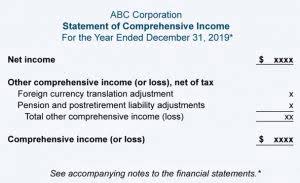
When automation and AI-driven tools handle the more routine tasks, partners can focus on complex client challenges, strategic advisory, and relationship building. Agentic AI detects suspicious activities early by identifying anomalies in financial data and transaction patterns. In some cases, AI agents can autonomously halt suspicious activities or escalate them for further investigation. This proactive approach not only mitigates risks but also reinforces trust and transparency within financial operations.